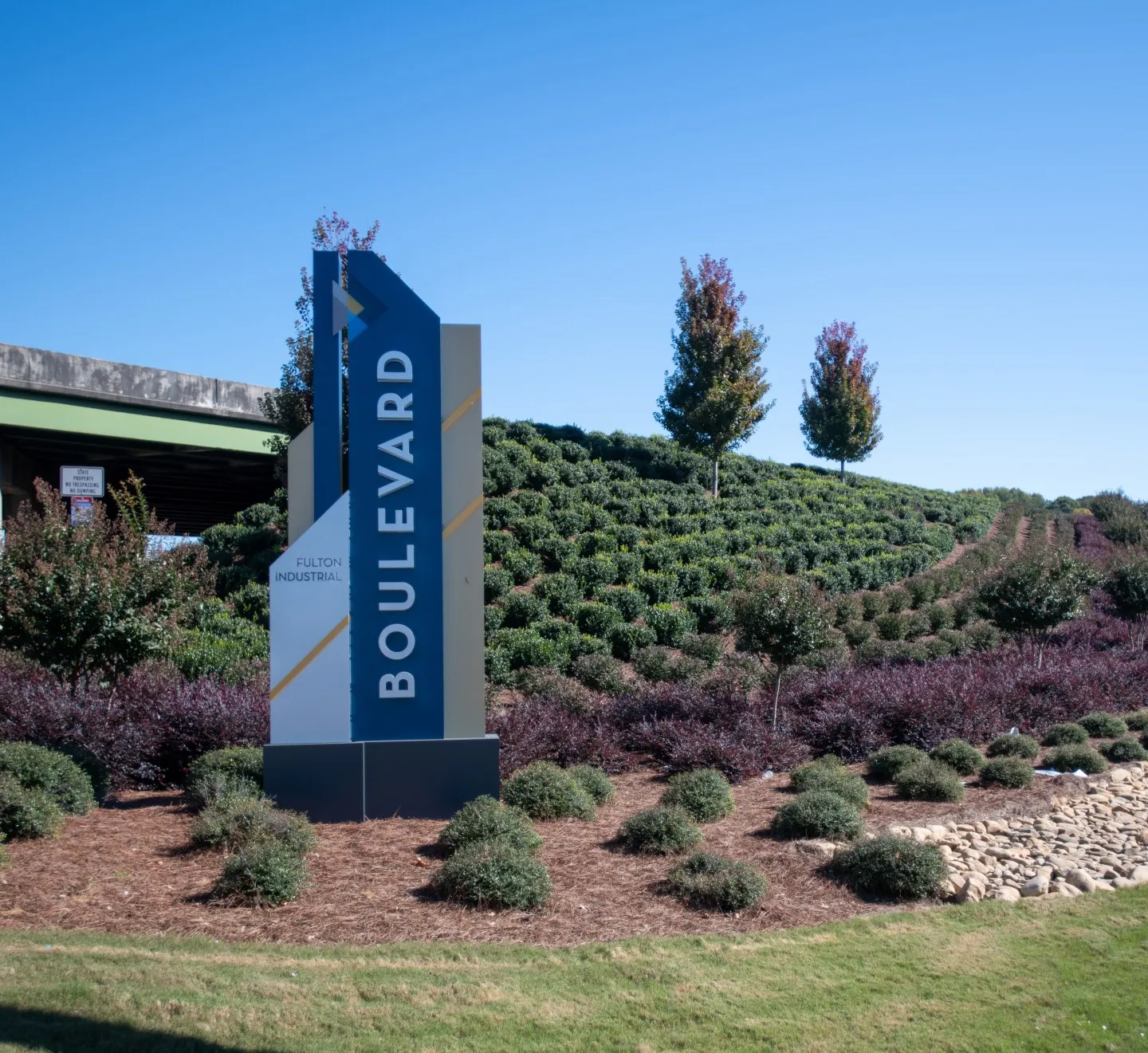
Landscaping & Beautification
Keeping the Fulton Industrial District Clean, Safe and Vibrant
Creating a clean and business-friendly district is one of the top priorities for the Fulton Industrial CID. To ensure the district is visually appealing for those who work and do business in the district, the CID manages a robust, year-round landscaping and beautification program. Prior to the creation of the CID, there were no sustained efforts to improve curb appeal across the district and landscaping and cleanup were identified as top priorities by area stakeholders.
The CID is responsible for the appearance and upkeep of the entire Fulton Industrial Boulevard corridor from Donald Lee Hollowell Parkway on the north to Campbellton Road on the south. The CID maintains 12 miles of roadways and 2.8 million square feet of medians and shoulders, which is equivalent to approximately 50 professional football fields.
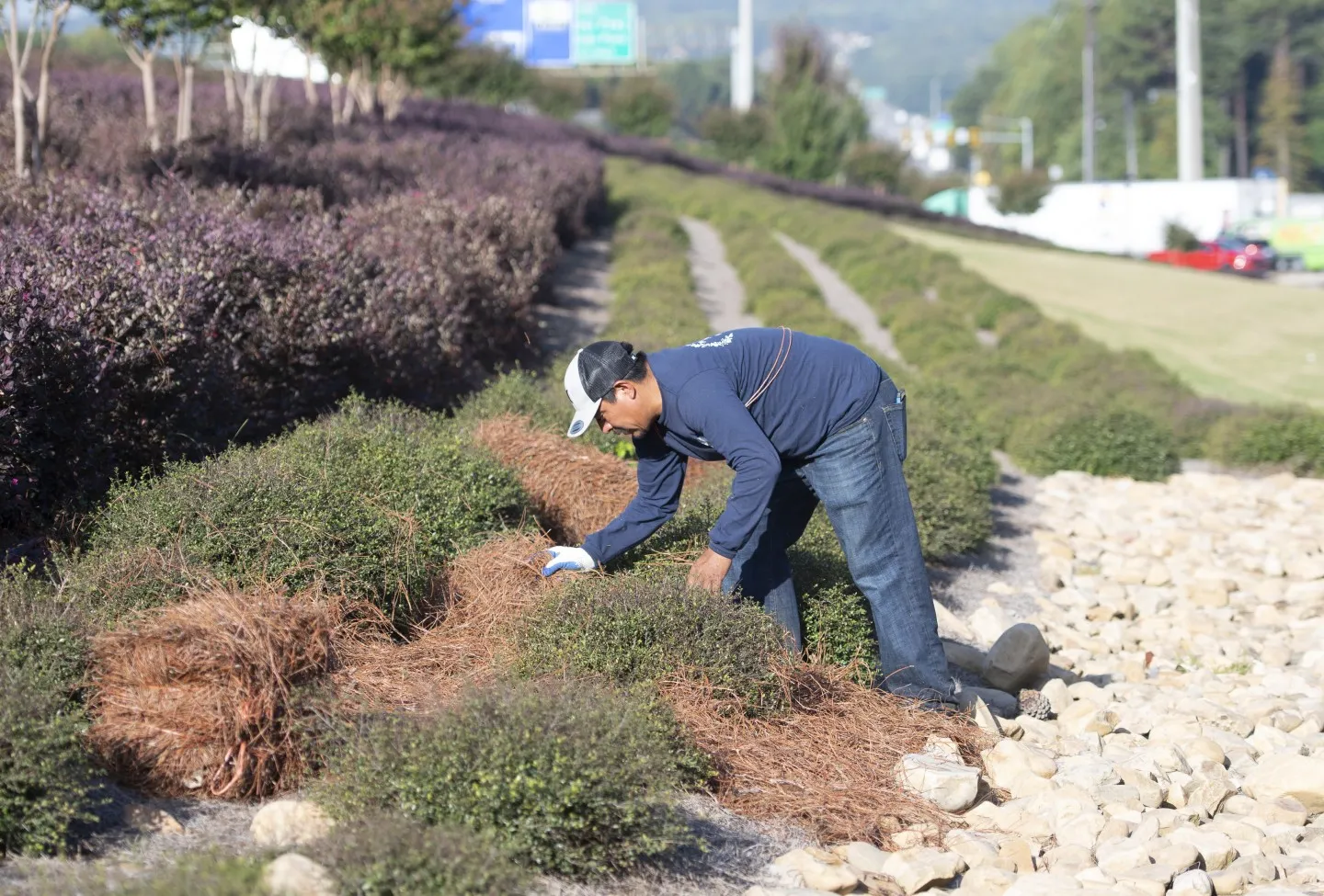
Landscape Maintenance Services
Landscaping crews work four days a week, 52 weeks a year to help
ensure the district is a clean, beautiful and safe place to work. Crews provide the following services:
- Litter control – Removal of trash and other roadside debris
- Turf maintenance – Mowing, edging, fertilization, weed and insect
control - Tree, shrub, and groundcover maintenance – Pruning, fertilization,
weed control - Mulch – Biannual pine straw installation and trenching at I-20/Fulton Industrial Interchange, select medians on Fulton Industrial Boulevard and Great Southwest Parkway.
Additionally, the CID works proactively with Fulton County, the city of South Fulton and the city of Atlanta code enforcement to curb illegal dumping and deferred maintenance on public and private properties.
Placemaking
Placemaking is another key component of the CID’s landscaping and beautification program. From gateway signage to public art, placemaking helps to create a distinct identity for this vibrant, industrial district. The recently completed Sustainability Framework identifies several signage and public art projects that will continue to build on the existing placemaking infrastructure.